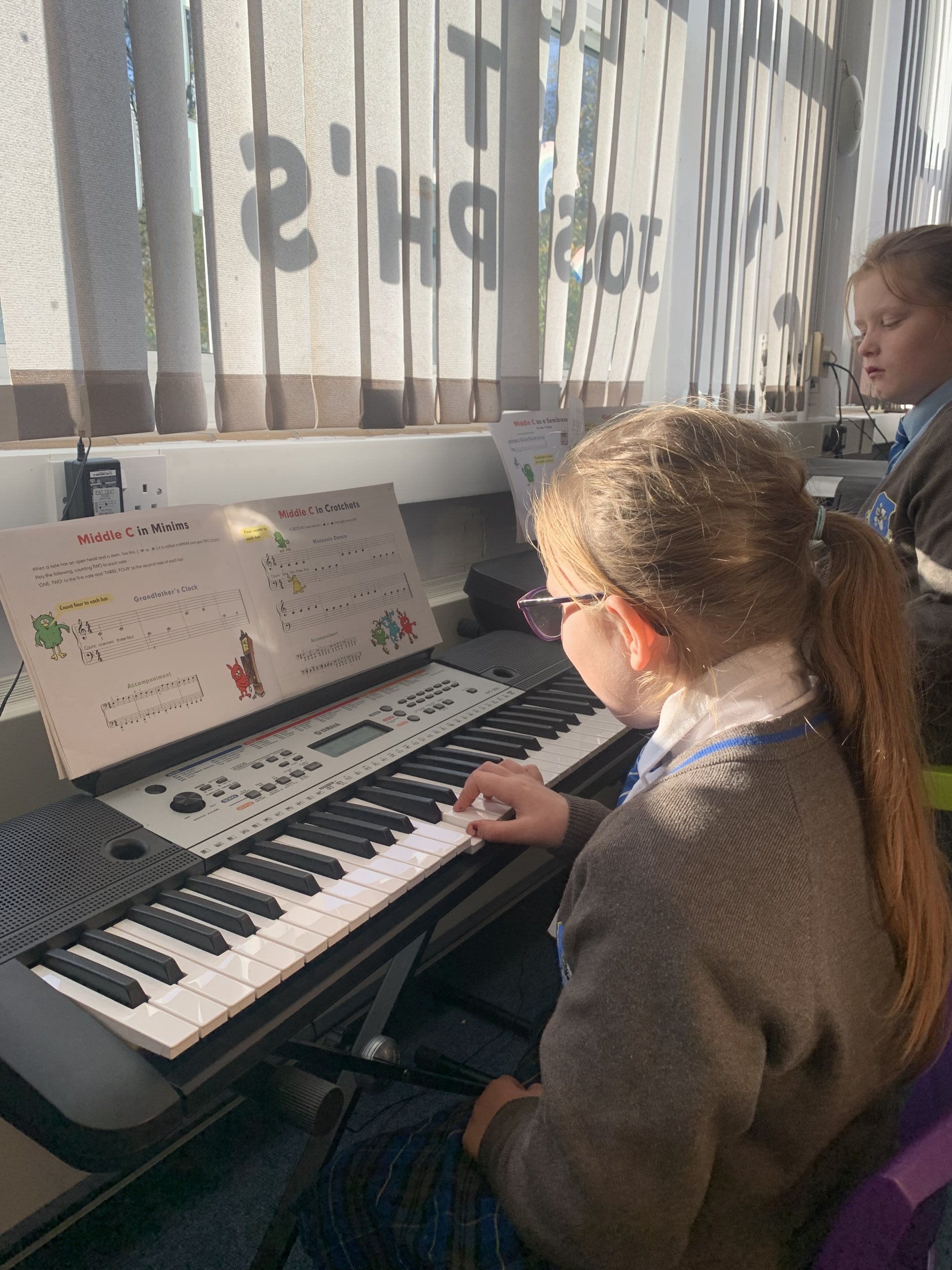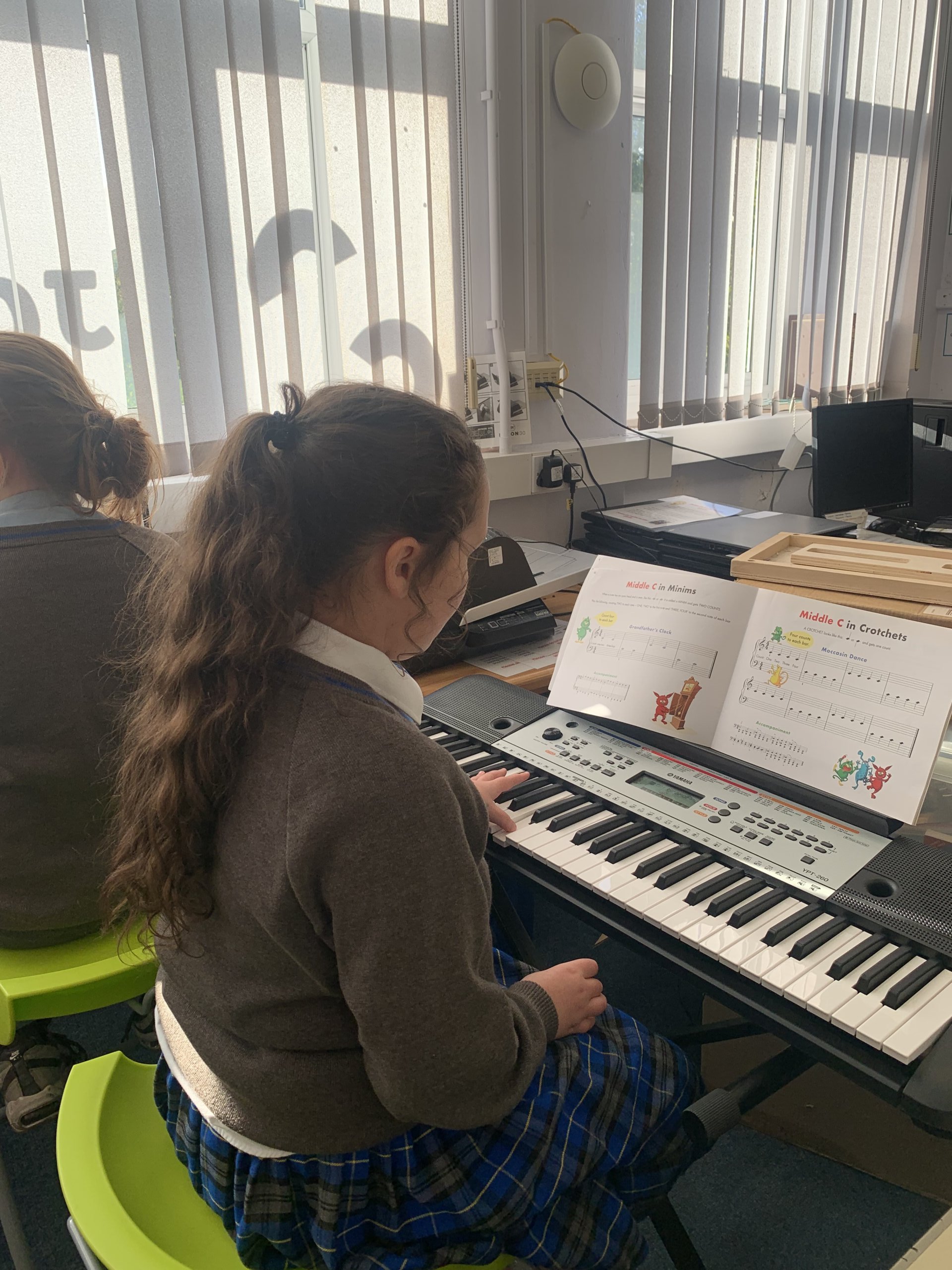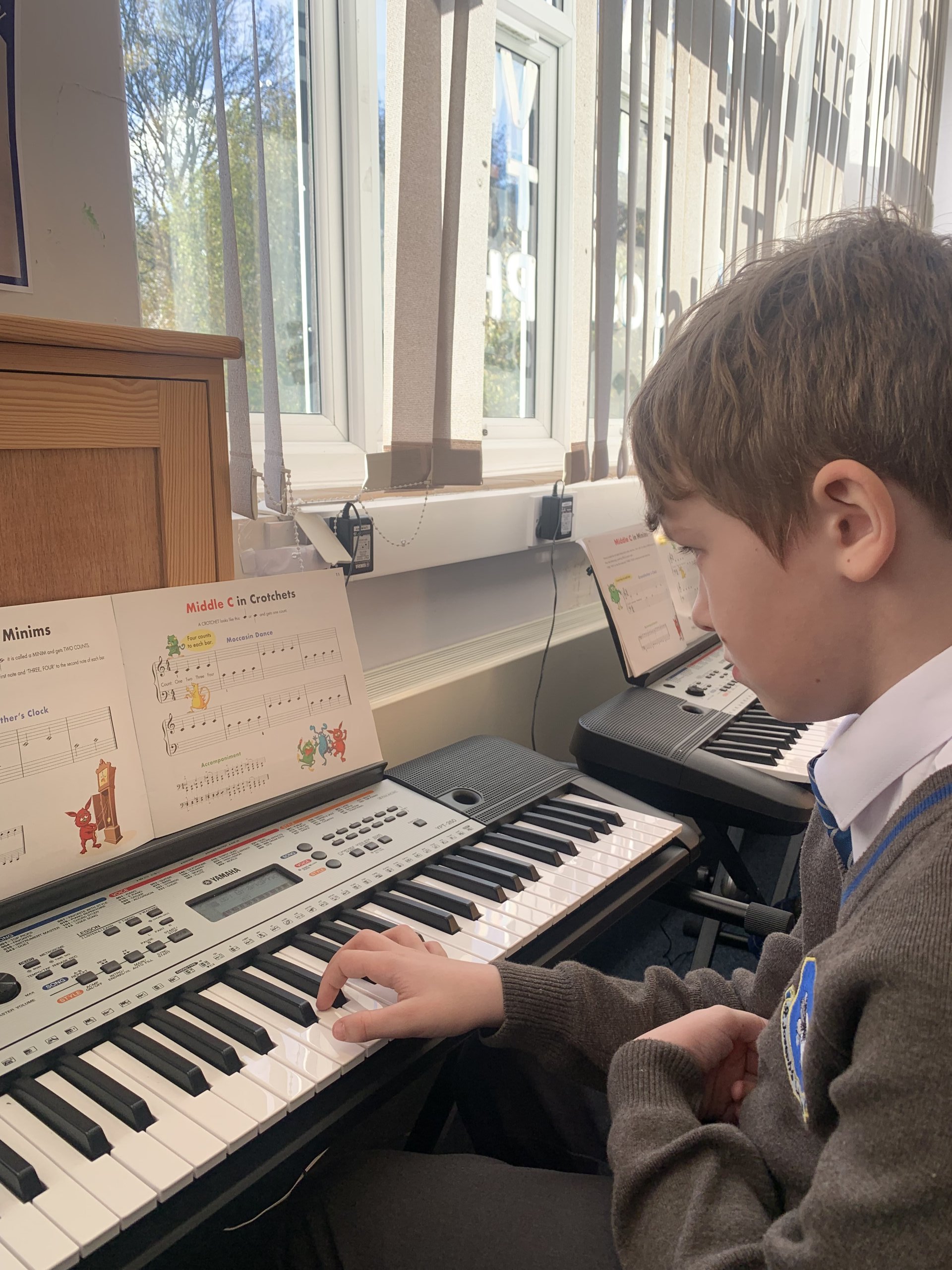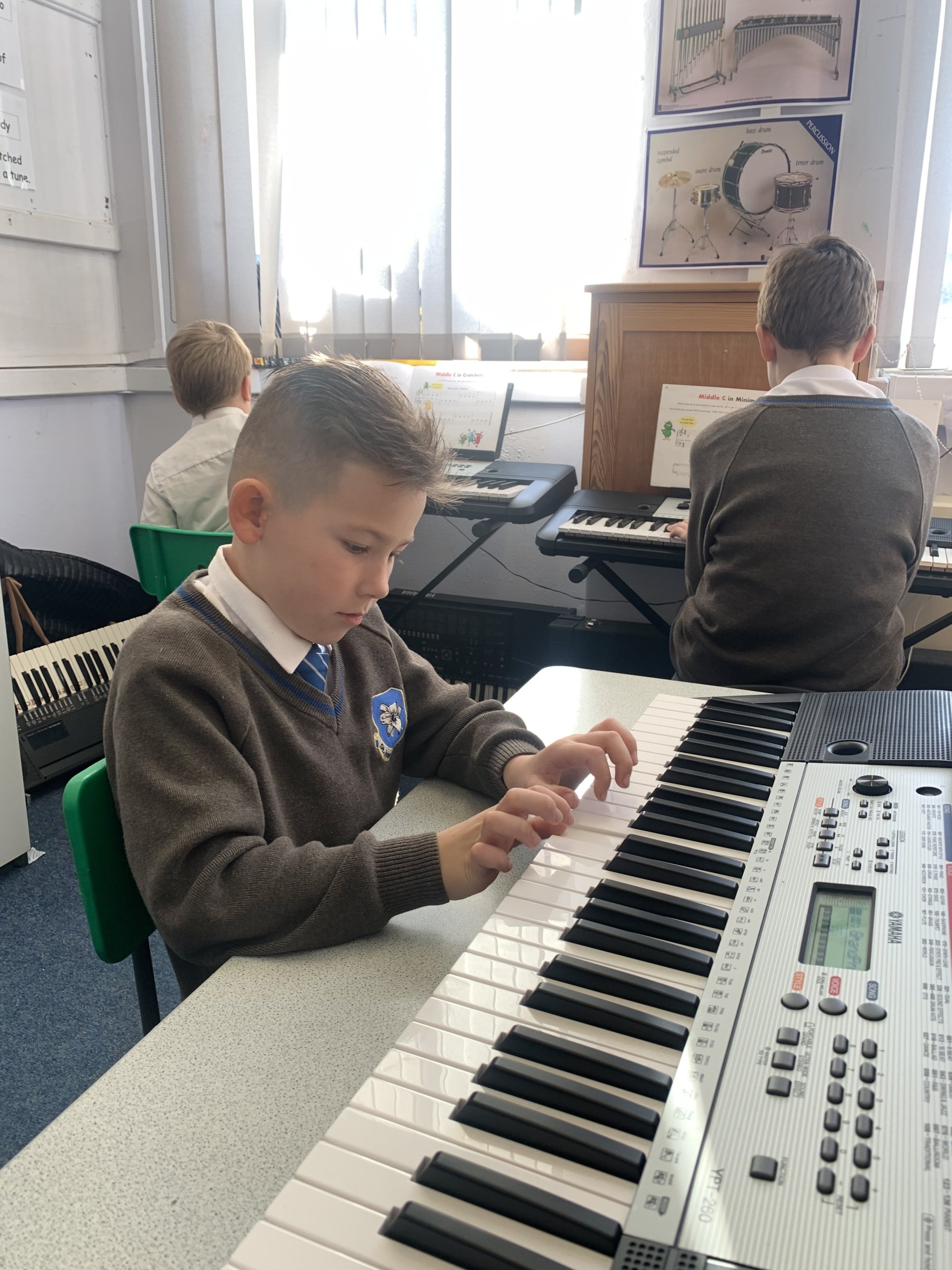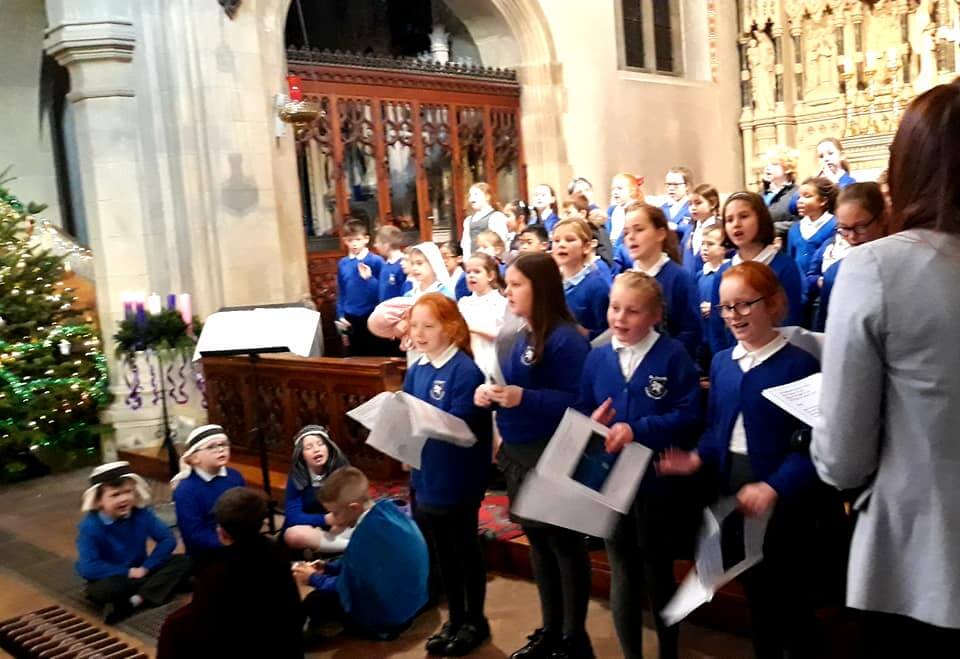
#Achievement #Enrichment #Catholiclife
‘Oh come, let us sing to the Lord; let us make a joyful noise to the rock of our salvation!’
Psalm 95:1
It is through these features that children come to understand how music can be used to express themselves and their emotions. Pupils are encouraged to experiment, through improvisation, composition and in using a range of instruments, to find different ways in which to be creative, while at the same time finding a way to demonstrate their emotions in a constructive manner and relate to others.
We aim to provide children with the opportunity to confidently progress in their creativity and expression along with working with other pupils.
Aims of the Music Curriculum
The national curriculum for music in Key Stage 1 aims to ensure that all pupils:
- use their voices expressively and creatively by singing songs and speaking chants and rhymes
- play tuned and untuned instruments musically
- listen with concentration and understanding to a range of high-quality live and recorded music
- experiment with, create, select and combine sounds using the interrelated dimensions of music
In Key Stage 2 the curriculum develops this knowledge and skills further to ensure all pupils:
- play and perform in solo and ensemble contexts, using their voices and playing musical instruments with increasing accuracy, fluency, control and expression
- improvise and compose music for a range of purposes using the interrelated dimensions of music
- listen with attention to detail and recall sounds with increasing aural memory
- use and understand staff and other musical notations
- appreciate and understand a wide range of high-quality live and recorded music drawn from different traditions and from great composers and musicians
- develop an understanding of the history of music.
At St Joseph’s, we believe that children should be given the skills to become effective and successful musicians. We aim to build children’s musical skills through the six main areas of musical understanding:
- Listen and Appraise
- Singing
- Playing
- Improvisation
- Composition
- Performance
Our music curriculum ensures that pupils are taught the key musical knowledge and vocabulary and these terms and knowledge are revisited and interwoven throughout units in each group enabling pupils to build upon and embed their understanding through spaced practice retrieval.
At St Joseph’s, we use the Sing Up! Scheme from Reception to Year 6 which provides an integrated, practical, exploratory and child-led approach to musical learning. The scheme explores the interrelated dimensions of music across each unit to encourage the development of musical skills as the learning progresses through listening and appraising, differing musical activities (including creating and exploring) and performing.
Useful Websites:
KS1 Music – England – BBC Bitesize